
This roundtable was led by E. Glen Weyl (Microsoft Research), Tim O'Reilly (O'Reilly Media & AI Disclosures Project), Ilan Strauss (AI Disclosures Project), Jordan Gimbel (Microsoft), and David Rothschild (Microsoft Research).
The roundtable brought together AI product leaders, market-design economists, standards engineers, policymakers, publishers, and creator representatives at Microsoft Research New York to specify concrete mechanisms for the AI data economy across the model lifecycle — pre-training, mid-training, post-training, and inference.
As data becomes central to model production and to agentic deployment, the mechanisms for attributing, pricing, licensing, and compensating data inputs remain underdeveloped. Working groups focused on making tangible progress: technical attribution across model stages, collective bargaining institutions, pricing regimes, business models, and policy frameworks that could sustain a broader base of participation in AI value creation.
Some participants preferred not to be listed publicly. Click any name to read their bio.

Julia Beizer is Corporate Vice President, Content Product at Microsoft AI. She previously held senior product and digital leadership roles at Bloomberg, HuffPost, and The Washington Post, giving her extensive experience in how journalism is produced, distributed, monetized, and adapted to new technology platforms.
Beizer is a graduate of Wesleyan University and has also taught at Columbia University's Graduate School of Journalism.
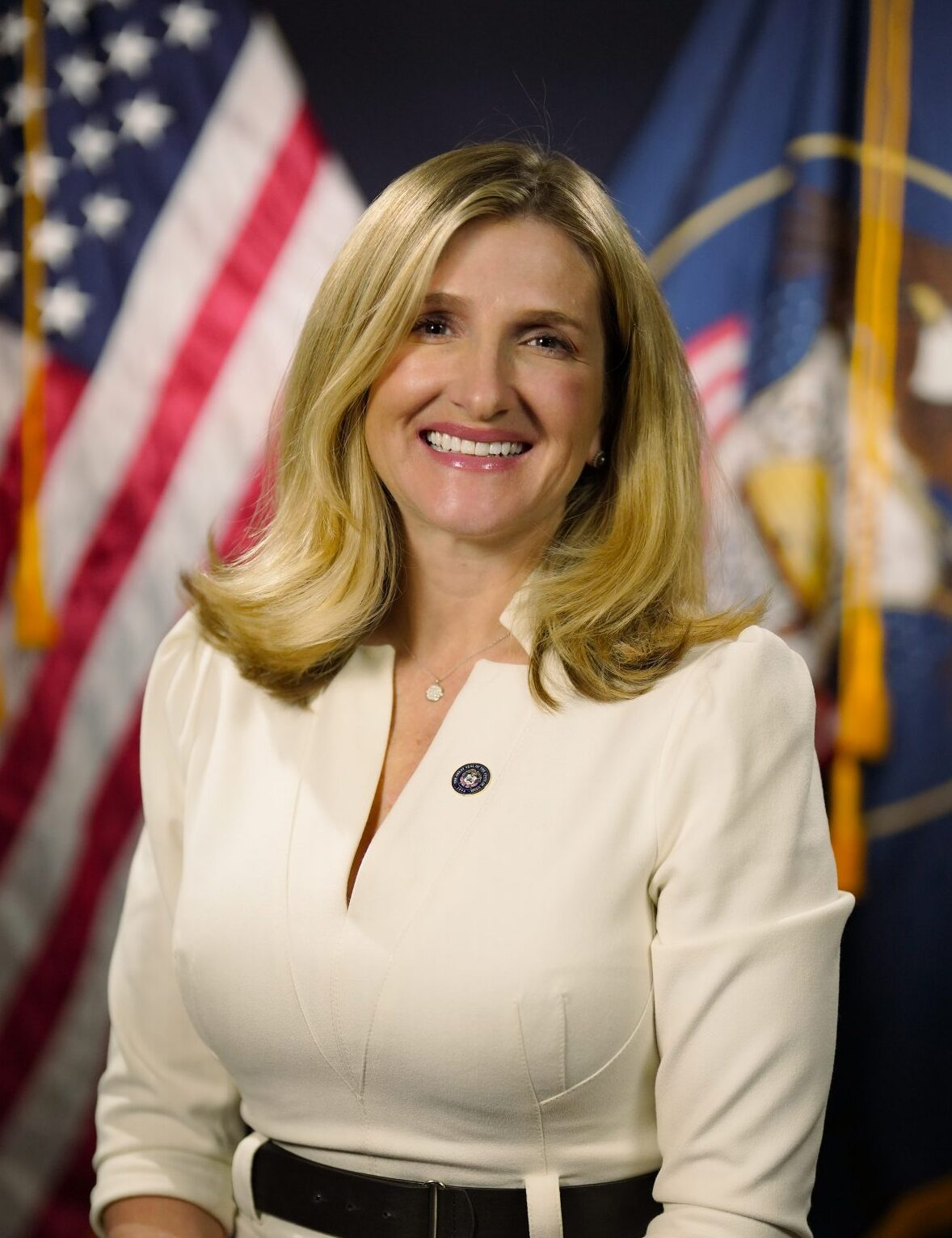
Margaret Woolley Busse is Commissioner of the Utah Department of Commerce, a role she has held since 2021. She has led the state's unusually active approach to AI and digital-market policy, including creation of the Office of Artificial Intelligence Policy, AI guardrails and innovation pathways, deepfake-transparency rules, and data-portability and interoperability measures for social media. She previously worked in strategy consulting and public-service roles.
Busse holds an MBA from Harvard University and degrees in public policy and economics from Brigham Young University.

Brad Carson is Co-Founder and President of Americans for Responsible Innovation. He previously served as President of the University of Tulsa, as a U.S. Representative from Oklahoma, and in senior roles at the U.S. Department of Defense, and is a veteran of the U.S. Navy Reserve.
Carson earned a BA from Baylor University, studied at Oxford as a Rhodes Scholar, and received a JD from the University of Oklahoma.

Zoë Cullen is the Michael B. Kim Associate Professor of Business Administration at Harvard Business School. She joined HBS in 2018 after serving as a chief economist at a Southeast Asian bank. Her recent work examines ownership and bargaining over worker-generated data used to train AI, including research on whether individual data rights or collective bargaining better protect workers when firms seek access to expertise and work product. She is an NBER affiliate in Labor Studies and an associate editor at the Journal of Political Economy.
Cullen earned her PhD in Economics from Stanford University in 2016.

Doug Eck is Senior Research Director at Google DeepMind where he co-leads research efforts in Generative Media and Entertainment, spanning image, video, 3D, music, and audio generation. In 2015 he founded Google's Magenta project, which helped establish creative applications of machine learning as a major research field, and has been closely involved in questions about how generative AI interacts with creators, culture, and rights holders. Before joining Google, Doug was machine learning faculty at University of Montreal.
Eck earned a PhD jointly in Computer Science and Cognitive Science from Indiana University Bloomington.

Maryam Farboodi is Associate Professor of Finance at the MIT Sloan School of Management. With Laura Veldkamp she co-authored "A Model of the Data Economy" and "Data and Markets," and she has developed methods for measuring the value of financial data. Before MIT, she was on the faculty at Princeton University.
Farboodi earned a BSc in Computer Engineering from Sharif University of Technology, an MSc in Computer Science from the University of Maryland, and a joint PhD in Financial Economics from the University of Chicago Booth School of Business and Department of Economics.

Jordan Gimbel is Associate General Counsel at Microsoft, where he leads the Open Innovation Team. He previously served as Deputy General Counsel at Twitch, where his responsibilities included litigation, product counseling, government inquiries, trust and safety, advertising, and privacy, and earlier worked at Yahoo and Jones Day.
As a Fulbright Scholar, Gimbel pursued postgraduate legal study at Stockholm University, including work in information technology and European intellectual-property law.
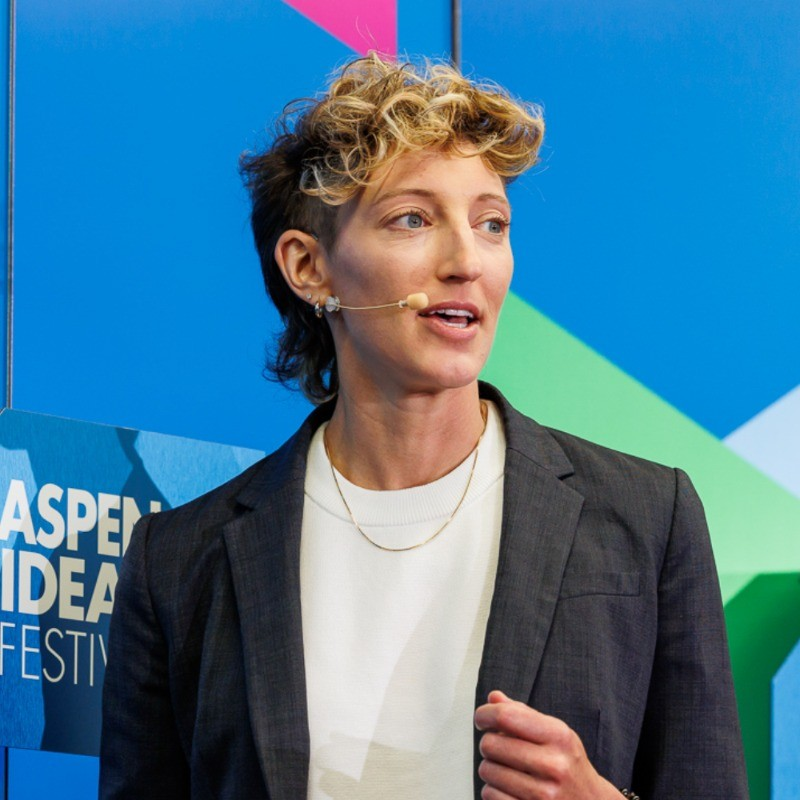
Beth Goldberg is the inaugural Executive Director of Humanity AI and a Senior Fellow at the Yale Jackson School of Global Affairs. Humanity AI is a philanthropic collaborative investing $500M in ensuring a future with AI that advances human agency. She spent eight years prior leading an R&D lab at Jigsaw, Google's social-impact incubator, leading research and product development on disinformation, cyberattacks, harassment, and human agency.
Goldberg holds an MA focused on tech governance and an MBA from Yale University and a BS in International Politics and Arabic from Georgetown University's School of Foreign Service.

Alex Hancock is a Senior Software Engineer at Block, a core contributor to Goose, and a member of the Model Context Protocol (MCP) Steering Group. At Block he is a core maintainer of Goose, the company's model-agnostic open-source agent, and has helped shape MCP through work on SDKs, registry design, authentication, developer tooling, and technical governance. His work places him at the center of efforts to make agent ecosystems interoperable rather than vertically integrated around individual model providers.

Michael Hind is a Distinguished Research Staff Member at IBM Research. He was among the originators of IBM's AI FactSheets approach — an early framework for documenting the purpose, performance, safety, security, and provenance of AI services. He has contributed to open-source projects including AI Fairness 360, AI Explainability 360, and IBM's AI Risk Atlas. Earlier in his career he worked on programming languages, compilers, and systems research. He is an ACM Distinguished Scientist and a member of the IBM Academy of Technology.
Hind received his PhD from New York University in 1991 and previously taught computer science at SUNY New Paltz.

Zoë Hitzig is an Economist at the Anthropic Institute. Her research includes work on personhood credentials, privacy-preserving institutional design, and how information constraints shape the value created by AI systems. Recent papers include "Contextually Private Mechanisms" and work on the consistency dilemma in AI systems. Before joining Anthropic, she was a Junior Fellow in the Harvard Society of Fellows and worked at OpenAI.
Hitzig earned her PhD in Economics from Harvard University in 2023.

Jake Hofman is a researcher at Microsoft Research New York City, where he works on human-AI interaction, AI-augmented cognition, and the future of the agentic web. His recent work includes "Steroids, Sneakers, Coach," a framework for distinguishing AI systems that substitute for human capability from those that augment or build it, and "The Agentic Economy," which examines how AI agents could reorganize markets and the distribution of economic value. He is also an Adjunct Assistant Professor of Applied Mathematics and Computer Science at Columbia University and runs Microsoft's Data Science Summer School to promote diversity in computer science.
Hofman holds a BS in Electrical Engineering from Boston University and a PhD in Physics from Columbia University.

Nicole Immorlica is Professor of Computer Science at Yale University and a researcher at Microsoft Research. She joined Yale in 2025 after academic and research appointments including Northwestern University and Microsoft Research, where she has worked since 2012. She is an ACM Fellow and has received the Sloan Fellowship, Microsoft Faculty Fellowship, and NSF CAREER Award. Her research specializes in mechanism design, matching/market design, platforms, networks, and strategic behavior. Her 2024 paper "Generative AI as Economic Agents" argued that AI can be modelled as an economic agent with its own information and potentially different preferences from the user.
Immorlica earned her BS, MEng, and PhD in theoretical computer science from MIT.

John Irons is Senior Vice President and Head of Research at Siegel Family Endowment. He is also a Research Affiliate and Digital Fellow at the MIT Initiative on the Digital Economy and has held research affiliations at Stanford and The New School. Previously, he led Inclusive Economies and Future of Work programs at the Ford Foundation and held research and policy positions at the Rockefeller Foundation, Economic Policy Institute, Center for American Progress, and elsewhere.
Irons holds a BA in Economics from Swarthmore College and a PhD in Economics from MIT.

Samir Janveja is Vice President of Strategic Accounts at Deccan AI. Before Deccan AI, he spent more than a decade at Google and later worked at Amazon, giving him experience across large-scale technology platforms and AI data operations. His role places him on the commercial supply side of emerging AI data markets, where quality assurance, expert sourcing, and scalable delivery are central constraints.
Janveja holds a BBA from the University of Michigan's Ross School of Business and an MBA from the University of California, Berkeley's Haas School of Business.

Ruoxi Jia is an Assistant Professor in the Bradley Department of Electrical and Computer Engineering at Virginia Tech and Director of the Responsible Data Science Lab. Her work on Data Shapley helped establish a practical research agenda around assigning credit to individual training examples, an essential building block for data pricing, compensation, and functioning data markets. Her group's more recent work includes "Data Shapley in One Training Run," which received an Outstanding Paper Honorable Mention at ICLR 2025.
Jia earned a BS from Peking University and a PhD in Electrical Engineering and Computer Sciences from the University of California, Berkeley.

Sonam Jindal is an independent researcher focused on AI data markets, labor, and the data supply chain, most recently at Amazon. She previously led Partnership on AI's AI, Labor, and the Economy program, where she worked on responsible sourcing in data-enrichment and data-labeling supply chains and examined how AI production can reshape labor relations, inequality, and the distribution of knowledge. Her work bridges labor economics, AI governance, and data-market design.
Jindal completed an MSc at the Oxford Internet Institute in 2025 and holds a bachelor's degree in Economics from the University of Chicago.

Carina Khanjian leads frontier AI research partnerships for Google DeepMind and prototyping partnerships for Google Technology & Society.
Her career has centered on advising political campaigns, regulators, and enterprises through industry-defining technology shifts for over fifteen years, establishing frameworks for responsible privacy and AI deployment.
She currently partners with leading enterprises, cultural institutions, and world-class talent like Idris Elba to deploy Google's frontier models, GenAI tools (Gemini, NotebookLM, and Flow), and data sets to co-create new paradigms across film, fashion, art, and media.

Seb works in frontier AI governance and policy at Google DeepMind, where he focuses on how to responsibly manage the development and deployment of advanced and potentially transformative AI systems. He serves as a Policy Development & Strategy Manager, helping shape internal and external approaches to AGI and frontier model risks, oversight, and regulation. Before joining DeepMind, he was a Senior Technology Policy Researcher at Stanford University's Cyber Policy Center, studying how AI intersects with foreign policy, cybersecurity, and global development. His AI governance journey began in the UK government's Office for Artificial Intelligence in 2018, where he headed regulation efforts and advised on national AI policy. Earlier in his career, Seb qualified in international arbitration and disputes at Freshfields Bruckhaus Deringer, bringing a legal and regulatory lens to his later work on AI.
Krier studied a Law LLB at King's College London and earned an MPA focused on technology and impact evaluation from University College London.

Jaron Lanier is Prime Unifying Scientist in the Office of the Chief Technology Officer at Microsoft. He is a leading advocate of "data dignity": the idea that people should be recognized and compensated for the data and creative work that contribute value to digital and AI systems. His books include Who Owns the Future?, and with E. Glen Weyl he helped develop proposals to treat data contributions as economically valuable labor rather than a free input to centralized platforms. He was a founder of the field of virtual reality (VR).

Avantika Mehra is the founder of Engram, a New York-based startup developing research-grade data and evaluations for AI in open-ended domains, with an initial focus on open-ended financial workflows. She previously served as Chief of Staff at the Cosmos Institute, where she helped build programs supporting "philosopher-builders": researchers and founders developing AI systems intended to preserve human autonomy, judgment, and truth-seeking.
Mehra studied at the University of Virginia, where she was a Jefferson Scholar and graduated with distinction.

Markus Mobius is a Principal Researcher at Microsoft Research. He previously served as an Associate Professor of Economics at Harvard University. His work on digital news includes research with Susan Athey and Jeno Pal on the shutdown of Google News in Spain, which showed how aggregators can affect overall news consumption and the distribution of traffic across publishers.
Mobius earned a PhD from MIT in 2000 and previously completed an MPhil in Economics and a BA in Mathematics at the University of Oxford.

Frank Nagle is a Digital Fellow and Digital Fellow Scientist at the MIT Initiative on the Digital Economy. His work on open source has quantified the enormous economic value firms derive from shared software, and his 2026 Harvard Business Review article "Collaborate on the Core. Compete on the Edges." extends that framework to AI. He previously served as advising chief economist to the Linux Foundation and as a professor at Harvard Business School and the University of Southern California.
Nagle holds a doctorate from Harvard Business School, BS and MS degrees in Computer Science from Georgetown University, and an MS in International Business Economics from City University London.

Tim O'Reilly is Founder and CEO of O'Reilly Media and Co-Director of the AI Disclosures Project. A pioneer in the open source and Web 2.0 movements, Tim's current focus is on the impact of algorithms on society, governance of AI platforms, and the intersection of technology and economic policy. Through O'Reilly Media and his writing, he has helped define major technology movements and has increasingly focused on the institutional and market structures that determine who captures the gains from AI.
O'Reilly studied classics at Harvard University and graduated in 1975.

Parth Patel is Co-Founder and Chief Technology Officer of HUD, a Y Combinator W25 company. HUD enables organizations to turn real software and tasks into environments that can be used to train or evaluate AI agents; by 2026, the company reported that more than 50 businesses were using the platform and had raised $16 million. Patel's work sits at the infrastructure layer of the emerging post-training data market, where task specifications, environments, and reward signals become economically valuable inputs.

Jay Ram is Co-Founder and CEO of HUD, a Y Combinator W25 company. The company's stated mission is to enable a new class of "data entrepreneurs" who build and sell the environments and structured data used to train frontier models. In 2026 HUD reported more than 50 businesses using its platform and $16 million in total funding. Before founding HUD, Ram worked on consumer applications, machine-learning research, and quantitative research.
Ram attended Columbia University from 2020 to 2023.
Alex Reisner is a Staff Writer at The Atlantic.

Yorke Rhodes III leads blockchain work at Microsoft, where his focus spans emerging technologies including AI, distributed systems, and supply-chain innovation. He is also affiliated with the NYU Ethical Tech CoLab (Emerging Tech, Human Condition). He serves on the boards of the Enterprise Ethereum Alliance and the Blockchain for Social Impact Coalition, and has been recognised for work applying blockchain to supply-chain management and risk mitigation.

Sruly Rosenblat is a Technical Researcher with the AI Disclosures Project. His work has appeared in Cambridge University Press's Data & Policy, IEEE Access, and Towards Data Science, with a forthcoming paper in AI & Ethics. He is a lead protocol contributor to the AI Disclosures Project's draft Open Memory Protocol (OMP) specification and has published on and built prototypes around the Model Context Protocol (MCP), Nostr-based agent communication, training-data detection, and skills marketplaces. He manages the Open Memory Protocol Initiative's Discord and supports its emerging technical community.
Rosenblat holds a degree in Computer Science from Hunter College (top of his class).
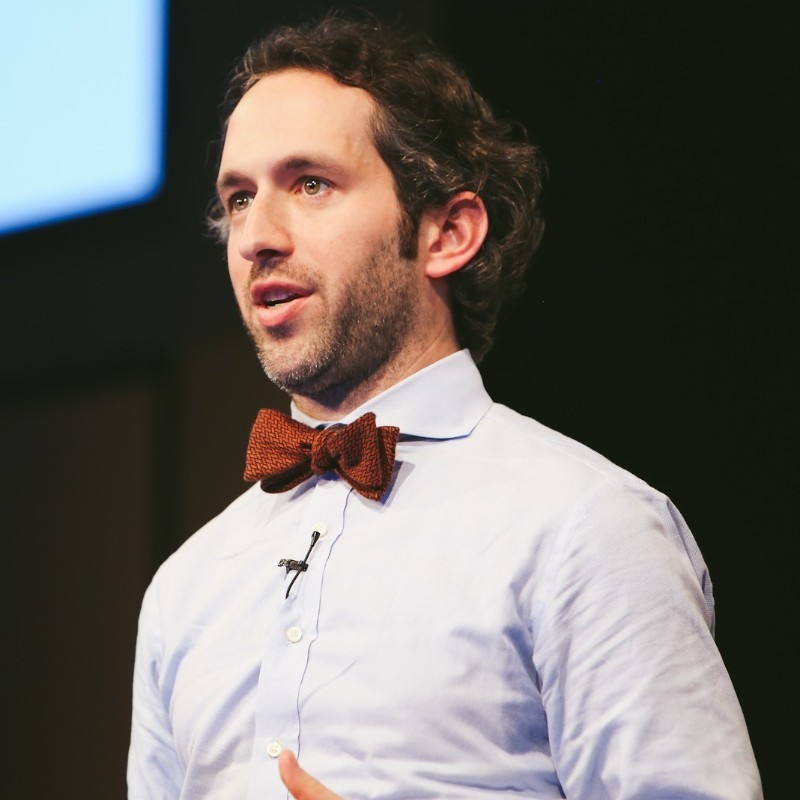
David Rothschild is an Economist at Microsoft Research New York City. His research has ranged from polling and prediction markets to news, advertising, social media, and large-scale behavioral data, and his recent work examines agentic markets and how AI agents could alter discovery, transactions, and the distribution of economic value between open ecosystems and vertically integrated platforms. He is a co-author of Microsoft Research's work on "The Agentic Economy."
Rothschild earned a PhD in Applied Economics from the Wharton School of the University of Pennsylvania.

Anjali Shrivastava is an independent researcher in inference economics and is incoming to Fluidstack's Compute Strategy team. Through research supported by Analogue Group, she has argued that tokens are not fixed units of cost because long-context workloads can create fat-tailed compute demand and non-shareable memory overhead. Before this work, she led monetization data science for new products at Adobe and worked on go-to-market analytics at Tana.
Shrivastava studied at the University of California, Berkeley.

Brennan Smith is Vice President and Head of the AI Business Unit at Prolific. He previously served as Head of AI Services at TaskUs, where he led AI data operations, model evaluation, and safety services, and spent nearly eight years at Welocalize, ultimately leading AI data services and global supply-chain operations. His career provides an operational view of how the human-data supply chain is sourced, managed, and scaled.
Smith holds a degree in Economics from the University of Rhode Island.

Sheila Spence is an independent corporate-development and strategy adviser working across multiple organizations. She formerly served as Vice President of Corporate Development at Spotify. At Spotify, which she joined in 2017, she established and led the global corporate-development group and drove acquisitions central to Spotify's expansion into podcasts and audiobooks. Earlier, she co-led North American corporate development at WPP, worked in corporate development at PRIMEDIA, and began her career in investment banking at Salomon Brothers.
Spence holds an MBA from Harvard Business School and an HBA from the University of Western Ontario; in 2025 she also completed executive programs on AI at Harvard Business School and MIT Sloan.

Ilan Strauss is Co-Director of the AI Disclosures Project and a Senior Fellow at the Microsoft AI Economy Institute. He is an Honorary Senior Research Fellow at UCL's Institute for Innovation and Public Purpose and a Visiting Associate Professor at the University of Johannesburg (Industrial Development). His recent work has examined the interplay between protocols and market structure, and has written on algorithms and market power with Tim O'Reilly and Mariana Mazzucato. He used to consult for the United Nations and African development bodies on industrial policy.
Strauss holds a PhD in Economics from the New School for Social Research in New York and a Masters in International Development Economics from SOAS (University of London).

Audrey Tang is Taiwan's Cyber Ambassador-at-Large and a Senior Accelerator Fellow at the University of Oxford's Institute for Ethics in AI. Tang served as Taiwan's first Minister of Digital Affairs from 2022 to 2024 after six years as Minister without Portfolio. With E. Glen Weyl, Tang co-authored Plurality: The Future of Collaborative Technology and Democracy, which argues for technologies and institutions that enable cooperation across differences rather than concentrating control. Tang is also a 2026–27 Distinguished Fellow at Columbia University's School of International and Public Affairs.
Tang is largely self-taught in computing and began contributing to open-source software at a young age rather than following a conventional university path.

Tomicah Tillemann is President of Project Liberty and of the Project Liberty Institute. His work includes the Decentralized Social Networking Protocol (DSNP), the Frequency network, and the Fair Data Economy Task Force, which has developed policy and institutional proposals for a more equitable data economy. Previously, Tillemann held senior roles at Andreessen Horowitz and Haun Ventures, served as an adviser to the U.S. Secretary of State, and led programs at New America.
He earned a BA magna cum laude from Yale University and a PhD with distinction from Johns Hopkins University's School of Advanced International Studies.

Andrew Trask is a Senior Research Scientist at Google DeepMind and the founder of OpenMined — an open-source community of more than 18,000 researchers and engineers developing privacy-enhancing technologies including PySyft. His recent work on attribution-based control (ABC) seeks to preserve the connection between data sources and the model outputs they influence, potentially enabling data owners to exercise control over use and supporting new licensing and compensation mechanisms.
Trask holds undergraduate degrees in Applied Discrete Mathematics and Finance from Belmont University and has pursued doctoral research at the University of Oxford.

Anna Tumadóttir is Chief Executive Officer of Creative Commons, a role she has held since 2024. Under her leadership, Creative Commons has focused on sustaining open knowledge in the age of AI, including the development of CC Signals, a technical and legal framework intended to let creators and dataset holders express preferences for AI reuse and establish new norms of reciprocity. Before Creative Commons, she spent roughly a decade building operations at distributed technology start-ups.
Tumadóttir holds a bachelor's degree in Political Science from Macalester College and a master's degree in Strategic Management from the University of Iceland.

Jordan Usdan oversees Microsoft AI's data acquisition strategy where he works at the intersection of AI, technology strategy, public policy, and society. He previously led corporate strategy work at Microsoft and has contributed to the company's thinking on AI data access and open-data policy. Usdan is also an adjunct instructor at Carnegie Mellon University, where he teaches Gen AI and society. Before Microsoft, he served at the Federal Communications Commission on broadband, spectrum, and digital-access policy and co-founded EveryoneOn, and is an Obama campaign alum.
He holds a J.D. from Georgetown University and a B.A. from George Washington University.

Nicholas Vincent is an Assistant Professor in the School of Computing Science at Simon Fraser University and a Research Director at Metagov. His work has helped develop the concept of "data leverage": collective or individual strategies through which people can influence technology companies by withholding, redirecting, or strategically contributing data.
Vincent earned a BS in Electrical Engineering from UCLA and a PhD in Technology and Social Behavior, a joint program in computer science and communication, from Northwestern University.

E. Glen Weyl is Founder and Research Lead of the Plural Technology Collaboratory at Microsoft Research. With Jaron Lanier and others, he helped develop the "data as labor" and "data dignity" agendas, arguing that people whose data contribute to digital systems should have stronger rights and economic claims. He co-authored Radical Markets with Eric Posner and Plurality with Audrey Tang, and is a founder of the RadicalxChange and Plurality communities.
Weyl graduated as valedictorian from Princeton University in 2007 and received his PhD in Economics from Princeton in 2008.

Tenzin Yangtso is an ethics architect at Civic.AI. As a contributor and cultivator of the 6-Pack of Care, she has helped develop a framework for AI systems organized around attentiveness, responsibility, competence, responsiveness, solidarity, and symbiosis, favoring inspectable and locally accountable systems over centralized models. Her earlier career included digital-community, entrepreneurship, and technology roles, including work at Yahoo and the Wretch social platform.
Yangtso holds a BS in Information Management from I-Shou University and has completed executive study in management at National Chiao Tung University and innovation management through the University of Leeds.

Erika Yorio is Vice President of Programming and Content at Helena. Her work focuses on translating complex ideas into programs, partnerships, and public-facing projects that can mobilize cross-disciplinary communities. Before and alongside Helena, she has worked across creative studios, publishing, cultural partnerships, and large-scale content projects, including collaborations involving Apple, Sotheby's, Condé Nast, and the Smithsonian.
Yorio studied at New York University.
Groups formed loosely around the Ideas Wall themes (technical attribution, collective bargaining, pricing, business models, policy). What each group actually landed up working on — and the concrete deliverable expected from each — is drawn from the working documents the groups produced.
How attribution and provenance can be woven into the model lifecycle in a way that is practical for developers and enforceable for creators.
- A survey paper cataloguing existing methods for attributing model outputs to pre-training data — characterising what level of attribution is achievable under different degrees of model-provider transparency, and helping readers pick the right method given the access they have.
- Shapley values make attribution a side effect. Once Shapley values are being computed for pricing or contribution accounting, attribution is produced as a byproduct of the same computation — a useful design point for downstream provenance and payment mechanisms.
- A broad-overview white paper showing that attribution is possible across the model lifecycle, and how existing techniques can be composed to make it practical.
Use of skill and post-training frameworks for objective testing and objective alignment — and the nature of the institutions and mechanisms needed for governance of AI by society rather than via industry self-governance.
- Documents vs. action. When governments and nonprofits express their rules only via documents (laws, regulations, policy), they are at a major remove from the actual action; whatever they intend will likely be interpreted very differently in the technical layer. Real technical work — evals, holdout datasets, and perhaps ways to specify what has to go into the weights via training — is where governance actually lands.
- Rules vs. rewards. The distinction between hard rules and reward/penalty regimes is not discussed by policymakers, but it should be. It clarifies where we need enforceable rules (and which mechanisms enforce them) versus where positive or negative rewards can do the job.
- Institutions vs. mechanisms. Part of what makes something an institution is the power to enforce the mechanism. Some mechanisms are self-enforcing (protocols like TCP/IP or MCP — though even there, standards have custodians), some are enforced by market power (search-engine behaviour), some by industry consortia (GSMA, FINRA), some by government. Working out which model fits which part of AI.
- Post-training / skill-based framing on alignment as a governance question
What would it take for people to negotiate with AI at the scale at which AI negotiates with society? Pool negotiating power, not unrestricted personal data. Return value to people and the commons without enclosing open knowledge.
- Three data types were mapped. The group distinguished internet-scale data, personal daily data, and specialised expert data — each needing different institutional forms.
- Workflow-based intervention points (Nicholas Vincent). A different frame followed the pipeline: AI model → harness → artifacts (traces, logs). Institutions can act at any stage — aggregating, gating, licensing, or attributing — to harness the collective.
- Pigouvian tax on tokens (Nicholas Vincent). A per-token levy — especially once robust data attribution is in place — could internalise the external costs AI systems impose on the data commons.
- Institutions as bargaining mechanisms. Individual contributors have no negotiating power at AI scale; institutions exist to pool, combine, and aggregate. This is not just about volume — much data can only be valued in relation to other data (a Shapley-value intuition: contribution depends on the combination).
- Open institutions on Creative Commons licences. The group examined how open institutions can use CC-style licences to shape the data use, reuse, and attribution chain end-to-end. arXiv was cited as a working example of an open institution shaping norms in an entire field.
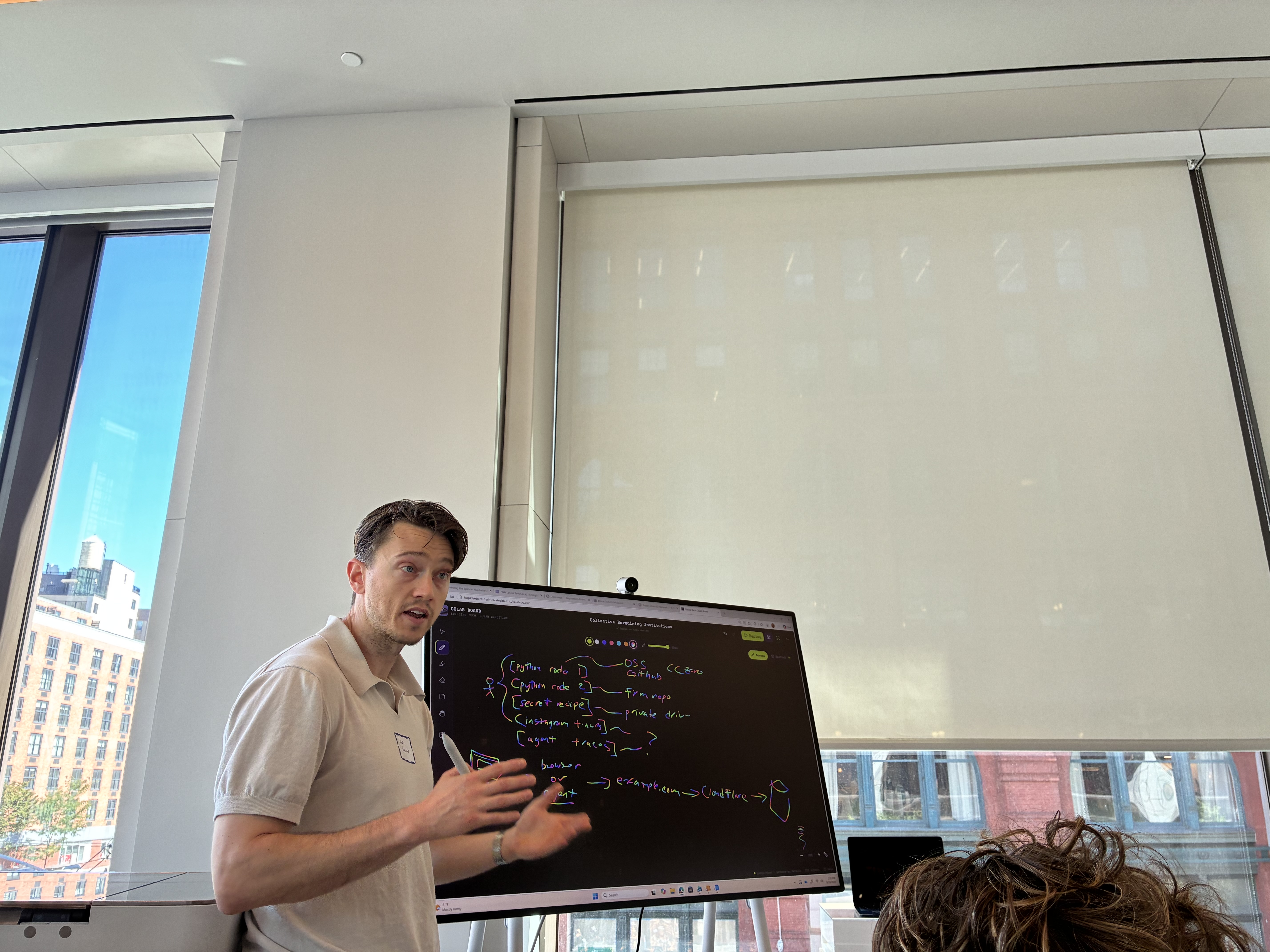
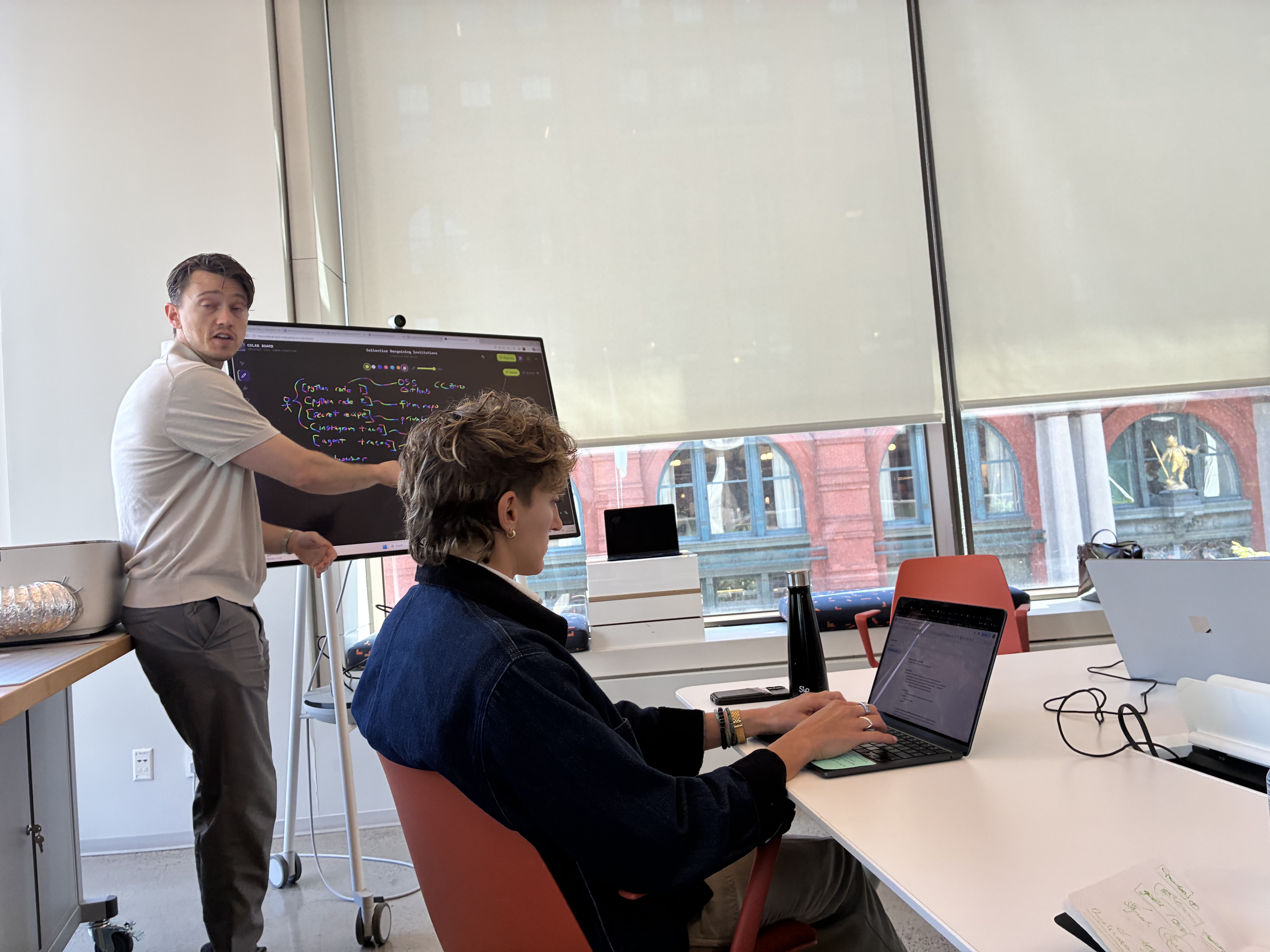
- Commons Collective (concrete instantiation). An institution that aggregates negotiating mandates rather than data. Distinguishes three functions: buying AI services collectively; bargaining over uses that contributors can actually authorise; and financing public goods that no individual contributor owns. Consumer-facing expression is a "digital Costco": a community-governed buyers' and suppliers' club that uses scale for people. The discussion draft proposes a rights-aware knowledge object, a separated-governance federation, a commons-benefit covenant, and a staged empirical program.
Commons Collective output from Ethical Tech CoLab.
- Policy note on CC-licensed institutions + Commons Collective public site
If everything can be trained on under fair use, how do we foster a healthy commons and a competitive ecosystem of data creators?
- Fostering the commons is the central challenge. Absent design intervention, the commons underwriting AI risks being drawn down faster than it can be replenished.
- Education enables the commons. The group argued that education is the mechanism by which people become creators and stewards of the commons in the first place — so any funding scheme should route back to it.
- A tax of sorts — perhaps on tokens — to fund education. Revenue captured at the point of AI inference (or model training) could flow into education systems that sustain the commons.
- Copyright as an obligations mechanism. To keep a competitive ecosystem of data creators alive, copyright may need to be reframed less as pure exclusion and more as a way to impose obligations on AI developers who benefit from creator output.
- Jurisdictional variance is now a first-order fact. The EU, Japan, Singapore, and the USA take significantly different approaches to fair use in AI training — any policy work has to engage this fragmentation, not paper over it.
- Policy / legal framing on copyright, fair use, and commons finance in the age of AI
Started as the Business Models group and converged on a specific mechanism: an independent rating body that reshapes the business model of AI companies (and their suppliers) by making the quality of the underlying data legible to buyers — so premium information can command premium prices and firms have a reason to invest in producing it. Foster sustainable demand for high-quality information — by making the quality of data used in AI post-training legible to buyers.
- Rate content used in post-training. Independent, impartial rating bodies (or agencies) — loosely analogous to the financial-sector rating agencies, though the analogy is imperfect — assign letter grades to datasets.
- Enterprise buyers use the grades to signal demand for quality. Some will pay for the highest grades; others will deliberately buy lower-graded data where that fits the use case. The point is making quality visible so both sides of the market can act on it.
- Impartial and outside the licensing chain. The rating body does not license or resell content, and does not set the price of underlying data. It is a shared piece of market infrastructure — in many respects an institutional intervention rather than a commercial one.
- Supply has to be built to create the demand. Nascent AI data markets are struggling on the supply side — with the notable exception of HUD.ai, which has assembled sellable supply. This is a hard problem for other marketplaces, and it extends beyond training data to inference-time data as well.
- Grounded in the Independent AI Content Ratings business-plan draft (see download): private letter grades (AAA / AA / A / B / C) per provider + product category, human-led raters (staff analysts and vetted domain experts), published methodology, fixed fees unrelated to grade. Initial wedge: Finance & Investing.
- Op-ed / policy note framing the case for an independent rating body as market infrastructure
How to discover efficient prices for the data feeding AI systems — especially where human work is mixed with AI work.
- A new web curated for AI, not humans. An AI-native discovery layer would give data markets a legible substrate on which to price content, rather than piggybacking on a web designed for human readers.
- Human data is more valuable — but only if you can prove it's human. Verification requires proof-of-humanity: cryptographic attestation, or observable traces of human computation, so that buyers can distinguish human-originated output from synthetic or agent-generated work.
- Pricing mixed human + AI work is harder. Once a workflow blends human and machine steps, attributing value to each contribution — and paying for it — becomes a first-order design problem.
- Trajectories as pricing artifacts. The traces produced by an AI harness (session logs, tool calls, edits) are inspectable records of the work process. They can serve as evidence for what was actually done, and by whom, at each step.
- Firms are incentivised to pay for human work. As synthetic content proliferates, verified human output becomes the scarce input; buyers have direct reasons to compensate it.
- Framing on pricing for human-verified data markets and mixed human + AI workflows
Work below is by the named contributor — shown at the roundtable but produced independently of the group work. Attribution stays with the author.